Elder Futhark Runes’ Meaning Explained: The Written Language of the Pre-Viking Age Norse
Western culture typically traces the history of writing systems back to the ancient Phoenicians by way of Greece and Rome. But other peoples in the continent developed written language. The Germanic peoples of late ancient and early medieval Europe developed the most famous of these other ways of writing – runic alphabets. Known now as elder futhark, this runic alphabet was the predecessor of the runes used in the Viking Age. As such, elder futhark may give us some insight into the development of the Viking world.
The Origins of Elder Futhark Runes
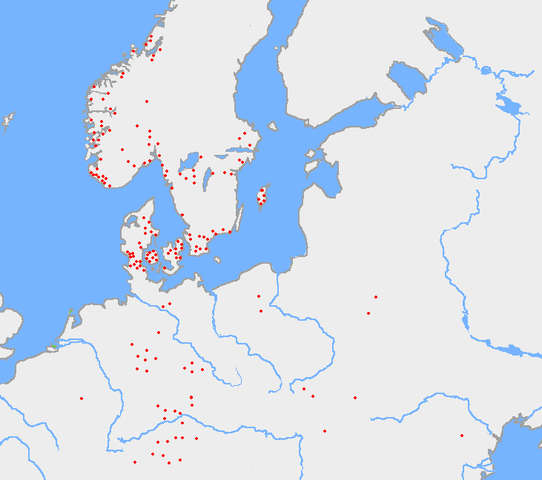
No one knows for sure when elder futhark was invented. Many speculate that it came about when Germanic peoples along the Rhine and the Danube rivers came into contact with the Roman empire and adapted the Latin alphabet to their own linguistic needs. But, however it came about, archaeologists have unearthed early runic inscriptions that date to the second-century AD.1
These early runes show an impressive mastery of the runic writing system, meaning it was nothing new. Based on these inscriptions, scholars estimate that the elder futhark system had been around for at least a century.2
No matter when and where it was invented, elder futhark eventually had spread throughout the Germanic speaking world and applied to multiple Germanic languages by 500 AD. Archaeologists have uncovered elder futhark runic inscriptions across a swath of modern countries, including Germany, Poland, Denmark, Norway, Sweden, Russia, Hungary, and a good amount of Anglo-Saxon runes in England.3 How extensively it was used in these different regions during late antiquity is impossible to say, as this runic script was designed to be carved into wood and, thus, much of it has been lost to time and decay. The inscriptions that do remain, however, come predominantly from Scandinavia. In use during an age known as the Vendel Period (c. 540-790 AD), the Norse language version of elder futhark is the precursor to the runic alphabet used by Norse Vikings during the Viking Age – a script known as younger futhark.
How Elder Futhark Was Used
While runic scripts were a writing system, they were not meant to operate like the writing systems we use today. Someone in the Vendel Period would not have sat down on the shores of a Swedish fjord to write an epic poem in runes. Rather, they were used for shorter messages: instructions, labels of ownerships, or a symbol associated with divine power (in the way Christians would later carve crosses into wood and stone).4
As we mentioned above, elder futhark was invented to be carved into surfaces, typically wood. For that reason, all of the symbols or letters that make up this runic script were created using straight lines and sharp angles. This system of carving letters into wood made perfect sense for the Germanic peoples of the time. They typically had a knife attached to their belt or else somewhere nearby and wood was perhaps the most abundant natural resource in their world. This allowed runic writers to pick up a stick and inscribe their message into it. If it was meant to be more formal, like a letter from a king or lord to their subjects, it might be carved on a slate of wood – but even this was far easier to make than paper.5
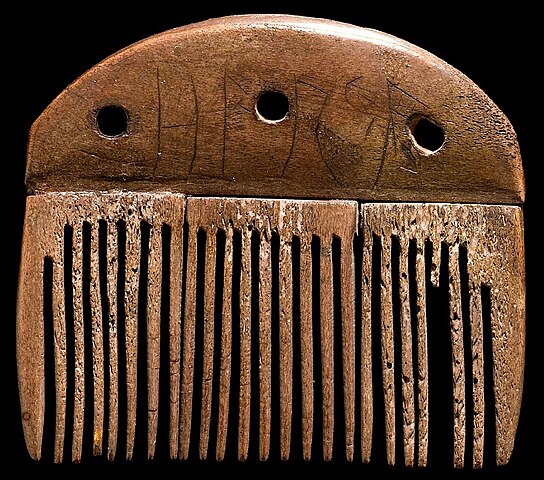
The largest collection of surviving wood with elder futhark inscriptions comes from Bergen, Norway. Here, archaeologists have found peoples names inscribed into goods (like the comb pictured above), runes that amount to the graffiti of the day, and even some longer letters. One such runic inscription says:
Sigurdr Lavardr sends God’s greeting and his own. The king would like to have your ship. For arms and equipment… a spear from the eighteen ells of iron that I sent you by Johan Øre.6
Decoding This Runic Alphabet

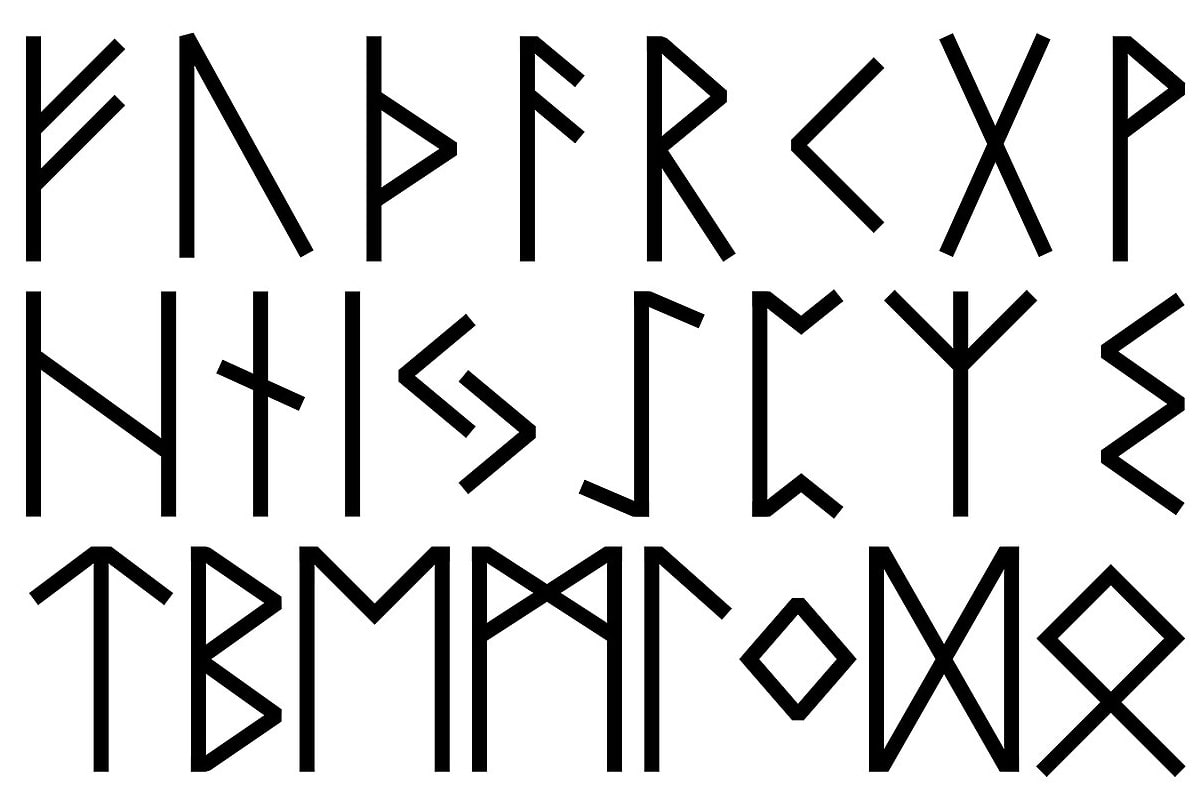
The elder futhark runic alphabet is composed of 24 runic symbols. Each of these symbols corresponds with a sound, as shown in the image above. Because elder futhark came about nearly 2,000 years ago, not all of these sounds will have modern English equivalents. But there are quite a few modern letters that line up to these ancient symbols! Interestingly, we get the name ‘futhark’ from the sounds associated with the first six runic symbols in this runic alphabet – f – u – þ (th) – a – r – k.
But elder futhark did not just function as an alphabet. Each of these runes could also be used to denote a word that started with the sound that rune made when used as a letter. A bit confusing, I know. So, in this way, elder futhark could also be pictographic. Some of these words come from everyday life, while some are clearly tied to Norse mythology.
The below table details each runic symbol with its closest equivalent sound in modern English and the meanings of these runes when used as standalone words:7
| Rune | Letter | Sound | Meaning (or related word) |
|---|---|---|---|
| ᚠ | f | ‘f’ | *fehu, “money, cattle, wealth” |
| ᚢ | u | ‘u’ | *uruz, “wild ox” |
| ᚦ | þ | ‘th’ | *þurisaz “giant” |
| ᚨ | a | ‘a’ | *ansuz “one of the Æsir (gods)” |
| ᚱ | r | ‘r’ | *raiðō “ride” / “journey” |
| ᚲ | k | ‘k’ | *kaunan “boil” / “blister” (or maybe “torch”) |
| ᚷ | g | ‘g’ | *gebō “gift” |
| ᚹ | w | ‘w’ | *wunjō “joy” |
| ᚺ | h | ‘h’ | *hagalaz “hail” (precipitation) |
| ᚾ | n | ‘n’ | *nauðiz “need” / “emergency” / “desperation” |
| ᛁ | i | ‘i’ | *isa “ice” |
| ᛃ | j | ‘j’ | *jēra “year” (but typically “harvest” / “good harvest”) |
| ᛈ | p | ‘p’ | *perðō? “pear tree”? (unclear) |
| ᛇ | ï/æ? | ‘ï’ or ‘æ’ | *eihaz/ei(h)waz “yew tree” (confused attestation) |
| ᛉ | z | ‘z’ | *algiz? “elk” |
| ᛊ or ᛋ | s | ‘s’ | *sōwilō “sun” |
| ᛏ | t | ‘t’ | *tīwaz/teiwaz “Týr” (the Norse god Tyr, god of war, justice, and law)8 |
| ᛒ | b | ‘b’ | *berkanan “birch” |
| ᛖ | e | ‘e’ | *ehwaz “horse” |
| ᛗ | m | ‘m’ | *mannaz “man” |
| ᛚ | l | ‘l’ | *laguz “lake” (or maybe “leek”) |
| ᛜ | ŋ (‘ng’) | ‘ng’ | *ingwaz “Ing” (Yngvi or Freyr, Norse god of fertility, wealth, and peace)9 |
| ᛞ | d | ‘d’ | *dagaz “day” |
| ᛟ | o | ‘o’ | ōþala/ōþila “inherited property” / “possession” |
English to Elder Futhark Translator
To have a little fun, I’ve created an English-to-elder futhark translator! I’ve checked this for accuracy using translations that I’ve been able to find through credible secondary sources. But, please, don’t use this to plan a rune symbol tattoo – I can’t handle having that on my conscience.
With that said, have fun making runes!
Sources on Elder Futhark
- R.I. Page, Reading the Past: Runes (Berkeley: University of California Press, 1987)
- Ibid
- Page, Reading the Past: Runes, 10.
- Page, Reading the Past: Runes, 8.
- Page, Reading the Past: Runes, 8-9.
- Page, Reading the Past: Runes, 8.
- Page, Reading the Past: Runes, 15; Emma Groeneveld, “Runes,” worldhistory.org
- Daniel McCoy, “Tyr,” norse-mythology.org
- Daniel McCoy, “Freyr,” norse-mythology.org