The Viking Longhouse: Insights Into Norse Architecture and Life
Throughout the Viking Age, the Norse lived in elongated rectangular structures called longhouses. The main building technique deployed across the Viking world, longhouses were the center of Norse social life. A Viking longhouse was where meals were cooked, animals and people slept and sheltered, and warriors gathered. To understand the world of the Vikings, it’s critical to understand these Viking homes.
How Viking Longhouses Were Built

From the northern reaches of Norway and Sweden through to the southern border of Denmark, Viking longhouses had an amazingly similar pattern of construction.
Norse builders would begin by digging postholes to support the large timber frames that outlined the walls. The outer walls were constructed of timber, stone, or turf (depending on where in the Viking world it was built), and then patched using wattle and daub. The walls were sometimes insulated further using turf or roofing material. At the beginning of the Viking Age, it was common for the corners of these walls to be rounded, but, by the end of the period, longhouses had evolved so that each wall met at a right angle.1
These walls supported the large roofs of the longhouses, and each roof had a hole in the middle to let out smoke from the fires lit within the home. The roof itself was made from wood shingles or earthen material, known as thatch.2
While the interior design would have varied from longhouse to longhouse depending on the wealth and needs of those who lived there, common traits existed. The centerpiece of a Viking house was the big rectangular hearth that sat in its center.3 Built-in benches used for sleeping surrounded this central hearth.4 Depending on the wealth of the inhabitants, longhouses would have additional living rooms, ceremonial halls, or areas for livestock, principally cattle.5
Life in a Viking Longhouse
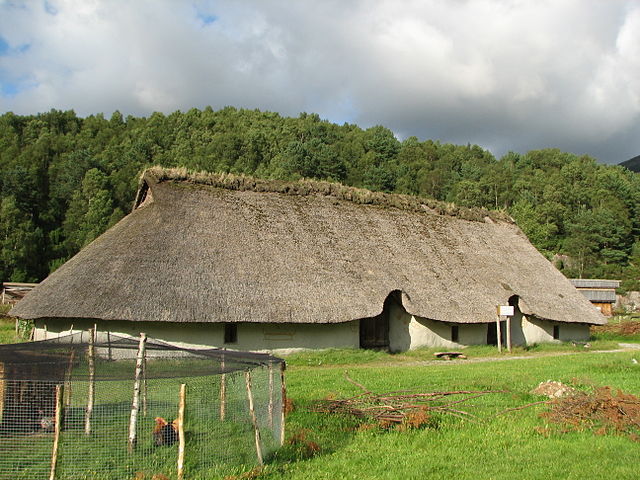
Viking longhouses would have been crowded, loud, and smoky places. Entire families lived, worked, ate, and slept within their longhouse. For poorer families, it may have just been the adults, their children, and any animals they tended. For wealthy Norse families, however, their whole family, plus slaves (called “thralls” in Old Norse), visitors, warriors, laborers, and animals all would have been crammed under the same roof.
Within the estates of the wealthy, their place in society could have been inferred from their quarters within the home. In Viking houses, it seems that thralls were forced to sleep in the byre, a room that had stalls for animals and crop storage. In Old Norse law, thralls could be beaten, killed, and sexually exploited by their owners, all without any punishment for their abuser. Thus, their place in the byre signaled that they were nothing more than a beast of burden.6
A largely agrarian society, the typical longhouse would have sat on a Viking farm. While many of these Viking Age sites are hard for archaeologists to excavate because they are still occupied by farmers, we have been able to learn a lot from them about how Vikings lived.
For the average Norse, most furniture would have been highly utilitarian. This most likely included unadorned benches for sitting and sleeping and cabinets for storing goods or farming equipment. The head of a household did, however, have a high-backed, intricately carved chair, called a “high seat,” indicating his vaunted place within the household.7
Abodes for the Living and the Dead
Another interesting aspect of life in Viking houses was their close association with the dead. Researchers have found that many of the longhouses located on farmsteads are surrounded by burial mounds. In one settlement at Ytre Moa, a site in western Norway, archaeologists have uncovered 20 circular stone cairns, each thought to signal a burial mound. At the far end of this same site, a woman’s grave was found under a large stone made into the shape of a boat.8
In Viking longhouses, the house itself also often became a burial site. Archaeologists have uncovered the remains of infants from postholes and beneath hearths; they’ve found adult Viking remains beneath thresholds and in postholes; and there’s even evidence to suggest that the dead were buried under a house when it was abandoned.9
Why exactly the Norse participated in these types of funerary rites we may never know, as they left no written record describing their motivations. But, based on the sagas that were recorded in thirteenth-century Iceland, we can get a glimpse in Norse’s beliefs that spirits of the dead could continue to have some agency in the world.
In the Laxdale Saga, a man named Hrapp tells his wife, Vigdis:
“When I am dead, I wish my grave to be dug in the doorway of my fire hall, and that I be put: thereinto, standing there in the doorway; then I shall be able to keep a more searching eye on my dwelling.”10
The saga goes on to relate how:
“After that Hrapp died, and all was done as he said, for Vigdis did not dare do otherwise. And as evil as he had been to deal with in his life, just so he was by a great deal more when he was dead, for he walked again a great deal after he was dead. People said that he killed most of his servants in his ghostly appearances. He caused a great deal of trouble to those who lived near, and the house of Hrappstead became deserted.”11
Are There any Viking Longhouses Left?
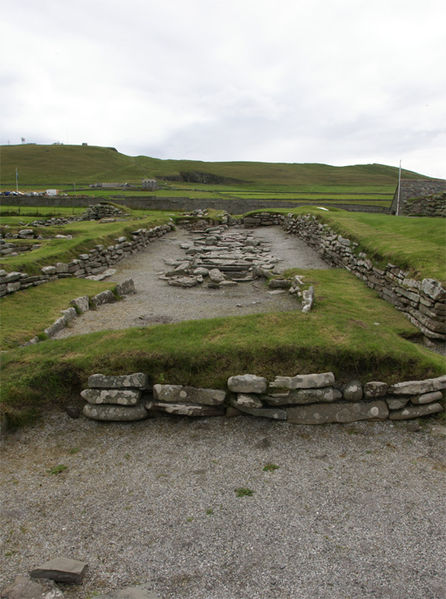
Yes and no. Given that timber was the main resource used to construct most of the buildings in the Viking age, only the stone foundations have survived. But, based on these foundations, archaeologists and historians have piece together much of what we’ve discussed in this article. And, some of the best reconstructions of Viking longhouses are based on these pieces of archaeological evidence.

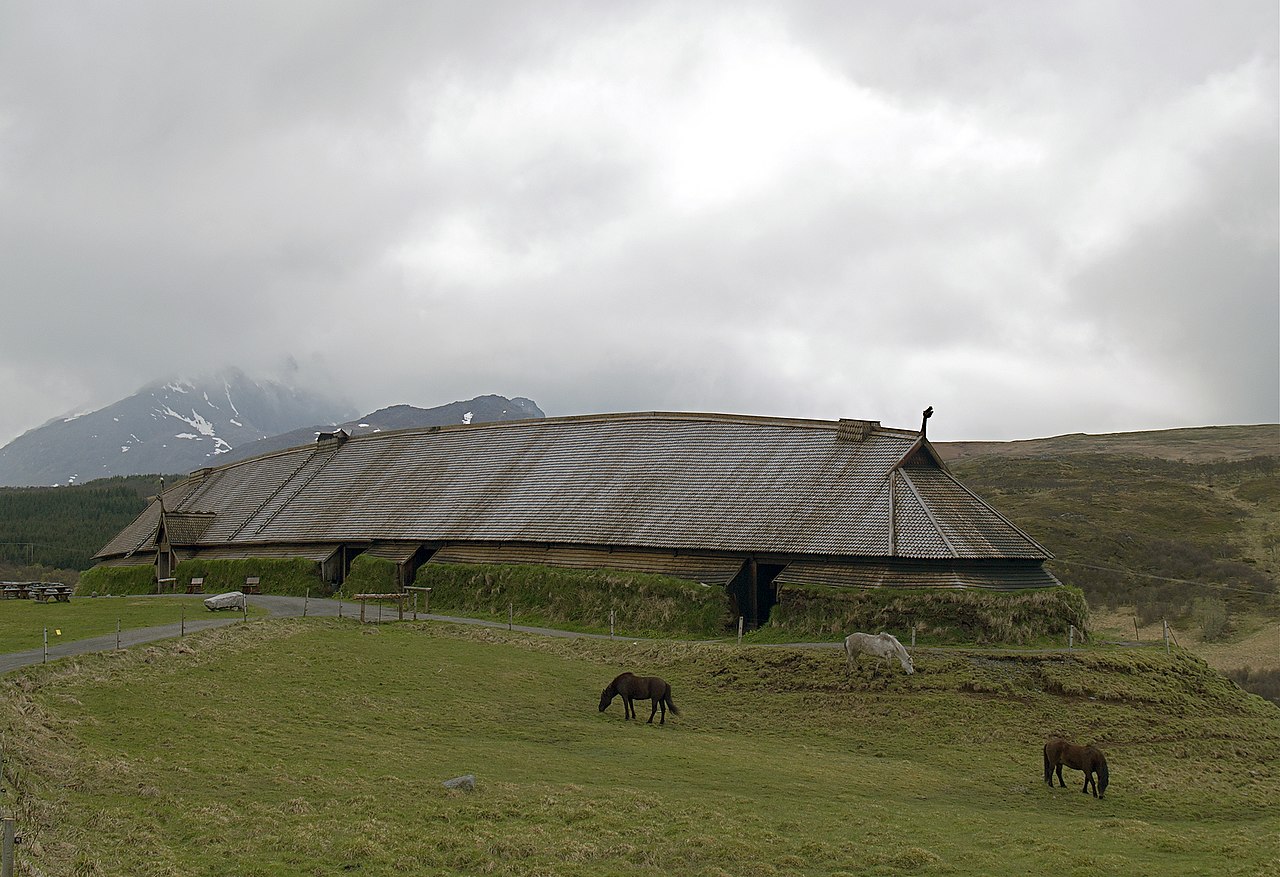
Perhaps the most spectacular reconstructed Viking longhouse is in Borg, Norway. Now the Lofotr Viking Museum and the largest excavated Viking house, this impressive longhouse once housed a powerful chieftain and his household. Located on the Vestvågøya island above the arctic circle, the longhouse was originally built before the Viking Age even began, sometime in the seventh-century, and was occupied until the c. 950s. This longhouse was particularly large, measuring 260 ft. (80 m.) long, by 24.5-29.5 ft. (7.5-9 m.) wide. The interior of the structure was divided into five rooms, including the main living area, a ceremonial hall, and byre.12
Apart from being an amazing glimpse into the everyday life of the Norse elite, the Borg longhouse demonstrates just how durable and effective longhouses were; otherwise, why use the same one for 300 years?
Sources on Viking Longhouses
- Richard Hall, The World of the Vikings (New York: Thames & Hudson, 2007), 41
- Hall, The World of the Vikings, 40-41
- Hall, The World of the Vikings, 41
- James Graham-Campbell, The Viking World (London: Frances Lincoln, 2013), 72
- Hall, The World of the Vikings, 43
- Marianne Hem Eriksen, “Viking Homes Were Stranger Than Fiction,” lifeinnorway.net
- Hall, The World of the Vikings, 41
- Hall, The World of the Vikings, 42
- Eriksen, “Viking Homes Were Stranger Than Fiction,” lifeinnorway.net
- The Laxdale Saga, sagadb.org
- Ibid
- Hall, The World of the Vikings, 43