Viking Warriors and Their Role in Norse History: Let’s Go Berserk!
Originating in the Norse homelands of Denmark, Norway, and Sweden, Viking warriors became the stuff of nightmares for opposing forces across Europe and into Asia and Africa. We even have evidence that Viking explorers skirmished with indigenous populations in North America. So who were these warriors who sacked kingdoms and traversed oceans?
Who Were Viking Warriors?
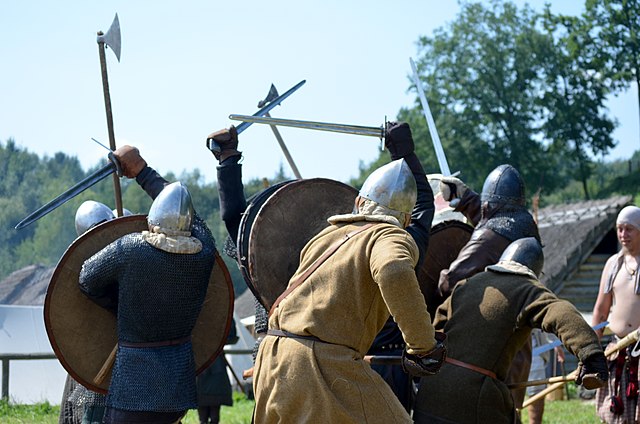
The first important thing to note about Viking warriors is that “viking” is not an ethnic description; it was more of a job title. The word “viking” comes from the Old Norse world “vikingr,” which meant something like “pirate” or “raider.”1 So, Vikings were pirates! They attacked other settlements, either over land or by boat, to capture goods, materials, and slaves.
While seemingly anyone could become a Viking, the most likely candidates were men who could afford to be away from their farms for an extensive period of time. Like the rest of medieval Europe, Norse society was largely rural, agricultural, with small to medium sized villages. Norse villages, in fact, usually held only 15 to 50 households.2 Most people, then, couldn’t afford to leave their farmstead for weeks or months at a time to besiege an English kingdom or pillage the land of a neighboring Norse lord.
Though the idea of Vikings as well-to-do medieval pirates runs counter to our popular imagination of them, I would like to confirm one widely held idea about Vikings: they could fight like hell. The Anglo-Saxon Chronicle, one of our best contemporary sources of information on the Vikings, relates how “it is nearly 350 years that we and our fathers have inhabited this most lovely land, and never before has such terror appeared in Britain as we have now suffered from a pagan race [Vikings].”3
To thoroughly terrify their opponents, Viking warriors entered battle by firing a volley of arrows before charging in armed with swords, axes, spears, and shields. The most elite warriors also wore chainmail into battle to provide extra protection.4 In the heat of battle, Vikings used swords in a slashing motion and swung their battle axes in huge, powerful arcs.
Types of Viking Warriors
If run-of-the-mill Viking warriors weren’t terrifying enough, a few elite level warrior cults evolved throughout the Viking Age. Known as berserkirs and ulfhe∂nar, these warriors were so fear-inspiring that we still use the phrase “to go berserk” in English!
Wolf and Bear Warriors

“Wolf-hides,” or ulfhe∂nar, and “bear-shirts,” or berserkirs, were both members of the shamanistic warrior cults that trace their roots back to ancient Germanic peoples. From helmets bearing imprints of wolf warriors and bear warriors that date to the Vendel period (c. 550 CE to 790 CE), we know that the concept of berserkirs and ulfhe∂nar began centuries before the rise of the Viking Age (if not even earlier!).
Scholars believe these warriors were known as “wolf-hides” and “bear-shirts” because they would wear bear and wolf furs into battle. But to be a bersker or ulfhe∂nar was about more than just wearing the furs of the animal – it was about embodying their ferocity. To enter into these vaunted military ranks, Norse men had to go into the wilderness and survive as a wolf or bear would do: hunting, foraging, and, when necessary, raiding. If they survived, these men were thought to inhabit the spirit of these ferocious animals.5
When they entered battle, berserkers and ulfhe∂nar would enter a battle trance which seemingly made them impervious to pain. While how exactly they did this is not known, some combination of fasting, exposure to heat, and ritualistic dances probably played a part. Once in these trances, sources tell us that these fearsome Viking warriors “shrieked,” “bellowed,” and “shook their weapons” as they entered the fight.6
One of the best sources we have on the battle frenzy these warriors entered comes from the Norse sagas composed by Snorri Sturluson. In the Saga of the Ynglings, Sturluson recounts how these warriors:
“…went to battle without coats of mail and acted like mad dogs or wolves. They bit their shields and were as strong as bears or bulls. They killed people, and neither fire nor iron affected them. This is called the berserker rage.”7
Jomsvikings

While we only have fragmentary evidence of the bear warriors and wolf warriors, our grasp on the jomsvikings is even more tenuous. We know they existed, which is a decent start, and that they made their homebase on an island off of the coast of Pomerania, a territory on the Baltic Sea that straddles what is today the coasts of Germany and Poland. Originally colonists from Denmark (Vikings created colonies all across the North Atlantic), the jomsvikings seem to have eventually become warriors for hire based out of their fort called Jomsborg, which means “Jom Fortress.”8
From here were have to rely on a couple of Norse sagas that appear to be a mixture of historical truth and fantasy. One of these sagas, known as the Jomsviking Saga, gives a hint a what Jomsborg might have looked like. In this saga, we’re told the first leader of Jomsborg, Pálna-Tóki “had a huge and strongly constructed city… a part of the city extended out in the sea, and in that part he constructed a harbor…”9 The city “was designed very cunningly,” with “an entrance to it, over which a great stone arch was made. There were iron doors at the entrance to the harbor which could be locked from the inside; and a huge tower was erected on top of the stone arch in which catapults were installed.”10
The Jomsviking Saga also gives some hints at what the Jomsvikings themselves may have been like. It seems that to become a part of this Viking warrior band, one had to be between 18 and 50 years old, had to renounce any desire to become a king, and had to be show extreme bravery and battle readiness. As the saga puts it, “no man must run from anyone who was as doubt and well-armed as himself” and “No one must speak a word of fear or be frightened in any situation however black things looked.”11
Even if these accounts are not 100% accurate, it seems safe to say that jomsvikings had a reputation for their physical prowess and bravery.
6 Famous Viking Warriors
When researching the Viking Age, there are any number of famous Vikings that stand out. I’ve done my best to pare it down to not only a digestable list, but one that includes Viking warriors we definitely existed. For this reason, as much as it saddens me (because I love the show Vikings), Ragnar Lothbrok is not in this list. Historians are still not sure what parts of his story from the Norse sagas are true and which parts are literary fabrication.
I also haven’t mentioned Leif Erikson because there’s no evidence he ever took part in a battle; and this is an article about Viking warriors, after all! We remember him as the explorer who lead a Viking crew through uncharted waters to become the first Europeans to land in North America and as a spreader of Christianity in Greenland. Not a bad resume!
Now, onto the viking warriors!
Harald Finehair
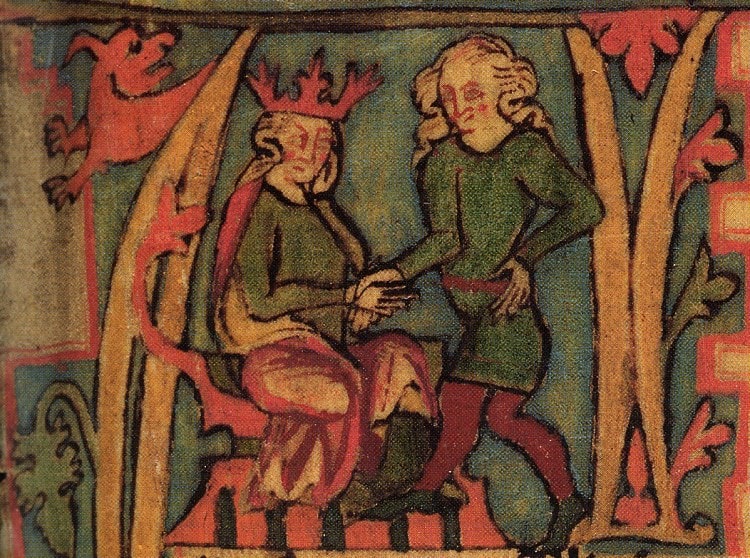
Harald Finehair was born around 860 in a small kingdom in southeastern Norway. His father, Halfdan the Black, was a famous Viking warrior in his own right. Descended from the Yngling dynasty, a powerful ruling family in Sweden, Halfdan ruled his Norwegian kingdom until his death c. 870. When Harald came to the throne, he was all of 10 years old.12
Now Harald I, he spent decades expanding his rule over the other kings and chieftains of Norway. By the time he was in his early 20s, if not a teenager, Harald was leading his armies to conquest. He began by subduing the rulers of the Norwegian interior. While he would never had a firm grasp over this area, he would retain nominal control over the interior region for the rest of his life.
After either conquering or creating treaties with these rulers, Harald moved west to Norway’s coast. Heregain, his armies successfully subdued the kings and rulers of the area. The final battle, known as the Battle of Hafrsfjord, ended with a victory for Harald. Afterwhich, he became the first king of a united Norway. This battle occurred sometime between 872-900, meaning Harald was anywhere from 12 to 40 years old when he crowned himself the king of Norway.13
No matter how old he was, Harald’s administration set about creating a system of taxation for the new kingdom that brought in a lot of weath for the crown. Unfortunately, many of the now conquered kings and lords were not used to paying taxes and set left Norway for the British Isles and Iceland where they hoped to carve out new kingdoms for themselves.14
Harald was such a powerful figure in Norwegian history, that all other kings of Norway would claim descent from him.15
Rollo

Born around 860 in Denmark, Rollo was one of the chieftains displaced by the conquests of Harald Finehair. After leaving Scandinavia, he led raiding expeditions in what are today Flanders, England, Scotland, and France.16
In Rollo’s lifetime, much of modern day France was part of the Kingdom of West Francia. A successor state of Charlemagne’s Carolingian Empire (which he split up among his heirs when he died), West Francia had been dealing with Viking incursions for decades by the time Rollow showed up. Until Rollo, though, Viking leaders had taken payoffs or plunder from the rich Frankish kingdom and returned home to Scandinavia. This was not uncommon in the medieval world, especially for rick kingdoms and empires – better to spend resources than have good warriors killed in battle.
Since Rollo left no written documents of his own, we’re forced to account for his movements using Frankish sources. Based on these sources, it seems Rollo began his trek through Frankia began in the city of Rouen. Located about 37 miles from the English Channel, it seems Rollo and his Viking warriors sailed down the Seine to reach the region in 876. Ten years later, it seems Rollo also participated in the famous Viking attack on Paris.17
By 911, Rollo’s raids on the region had become so devastating that Charles offered him a treaty which made him the ruler of Normandy. In return, Rollo was to cease his raids in Francia, swear fealty to Charles, and help protect the kingdom from foreign threats (like Viking raids). Unlike other Viking leaders who had come, pillaged, been paid off, and left, Rollo took the deal. He spent the rest of his life in Normandy, upholding the treaty he signed with Charles.18
Erik the Red
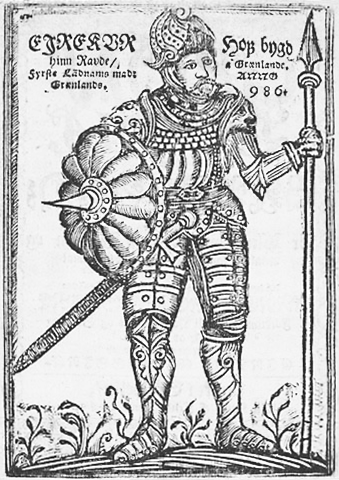
Based on the evidence we have for Erik the Red’s life, it’s hard to tell if he was a Viking warrior. He certainly killed people, but it was deemed manslaughter (more on that in a bit). But, as the seventeenth-century Icelandic image above shows, he went down in the history books as a warrior (even if there’s no way he would have owned a full suit of armor).
Born in Norway to a man named Thorvald, Erik and his family moved to Iceland when was young after his father killed someone and was convicted of manslaughter. Erik’s family settled in western Iceland where they lived until Thorvald’s death.
In 980, Erik’s slaves (thralls in Old Norse) accidentally triggered a landslide, crushing his neighbor’s house. In a retaliation fit for a period drama, a relative of Erik’s neighbor, a man named Eyiolf, killed the slaves responsible for the landslide. Then, of course, Erik killed Eyiolf and another man. As a result of all this violence, Erik was banished from his town. Two years later, Erik led an ambush against fellow Icelanders he felt had wronged him. As result, Erik was banished from Iceland for three years.
To pass the time, Erik sailed to Greenland with 14 shops carrying 400 to 500 other settlers. Establishing themselves in a settlement called Eystribygd (or the Eastern Settlement in English), Erik’s crew went on to create a thriving new colony. Though Greenand had been known to Norse explorers for about 100 years by the time Erik and Co. arrived, Erik gave it the name “Greenland” and the settlement he led integrated this distant land into the Viking world in a meaningful way. In fact, for the next 600 came and went from Greenland to the other parts of the Norse world, like Iceland and Scandinavia.19
Freydís Eiríksdóttir
Whether Erik the Red was truly a Viking warrior is up for debate – but there’s no question about his daughter.
Freydís Eiríksdóttir is mentioned in just two Norse sagas, The Saga of the Greenlanders and the Saga of Erik the Red. Both of these records revolve around her behavior on the Norse expedition to North America led by her brother, Leif Erikson. Unfortunately, no other corroborating evidence exists that can tell us, definitively, if Freydís was a real person, or an invention by saga authors to add some juice to their stories. But, let’s assume she was real.
Born as the daughter of Erik the Red and a servant or slave woman, Freydís would have occupied a lower social standing than her father and even her brother, Leif, who was born to Erik’s wife, Thjódhild. As a woman of lower standing in the tenth-century, it’s hard to say just how much of her fate was in her own hands. But whether it was her choice or not, we know that at some point she ended up on Leif’s expedition to North America.
Freydís in Saga of Erik the Red
In the Saga of Erik the Red, the Viking band that made it to North America encountered indigenous warriors in Newfoundland. Unfortunately, the encounter turned violent. Fleeing into the woods, some of the Vikings with Freydís were killed. In an attempt to rally the Vikings in her crew, Freydís shouted at them:
“Why run you away from such worthless creatures, stout men that ye are, when, as seems to me likely, you might slaughter them like so many cattle? Let me but have a weapon, I think I could fight better than any of you.”20
Racist overtones aside, this didn’t work. So, Freydís picked up a sword from the side of a fallen Viking and slapped the blade against her bare chest. The sight of pregnant woman hitting herself with a sword seemingly scared the Newfoundland warriors, as the saga notes, “at this they were frightened, rushed off to their boats, and fled away.”21
Freydís in the Saga of the Greenlanders
In the Saga of the Greenlanders, Freydís comes across a little more murdery.
In her portion of the saga, Freydís accompanies her husband, his followers, and two brothers on the voyage to North America. At some point during their stay in the North American settlement, she had a falling out with the two brothers, leading her to frame them for abuse. Upon making this accusation to her husband, he and his men killed the brothers and their followers.22
When her husband refused to kill the views of the men they had killed, the saga notes that “Then said Freydís, ‘Give me an axe!’ So was done; upon which she killed the five women that were there, and did not stop until they were all dead.”23
Olaf Tryggvason
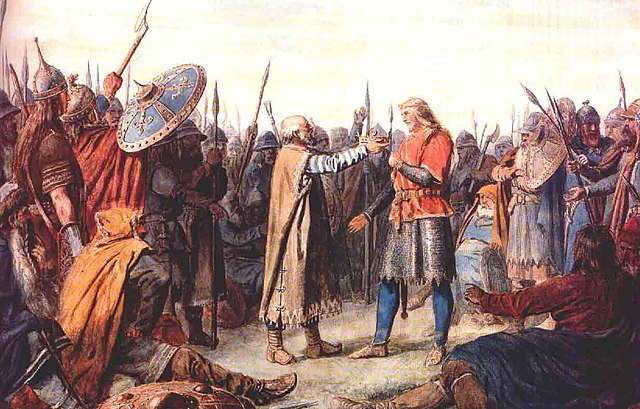
Born around 964 in Norway, Olaf Tryggvason was the great-grandson of Harald Finehair and the son of a man the sagas call “King Tryggvi.” Despite his noble birth, life was hard for young Olaf. According to The Sagas of Olaf Tryggvason and of Harald the Tyrant), Olaf’s father was killed while his mother, Astrid, was still pregnant with him. The saga then relates how Astrid and Olaf spent the next several years on the lam, eventually making their way to stay with her brother who’d made a name for himself among the Rus. A Rus ruler named Vladimir, King of Novgorod, took “Olaf under his protection, treated him with honor.”24
Olaf lived with King Vladimir from age 9 to age 18. By the time he was a teenager, the sagas tell us “Olaf was exceeding fair & tall to look upon and of mighty stature & of great strength withal. And in prowess in sports, so it is told, was he the best of all the Norsemen.”25 Under Vladimir, Olaf learn how to be a Viking warrior, as he fought in “divers battles and proved himself to be an able captain.”26
Eventually, after jealous nobles turned Vladimir against him, Olaf made his way back to Scandinavia. By the early 991, he was commanding 93 ships of his own during a Viking raid on England. Olaf and the other Viking warriors defeated the Anglo-Saxon armies they met and received £10,000 as payment to leave england. They did, but three years later, in 994, Olaf and other Viking leaders returned; this time, earning £16,000 in tribute from the English.27
Now rich beyond imagination, Olaf raised an army to conquer Norway. A man named Earl Hakon had taken control over large parts of the territory and met Olaf in battle in 995.28 Olaf’s forces prevailed and he was crowned as Olaf II. Sadly, he would only live another five years, dying in battle around the year 1000.
Harald Hardrada
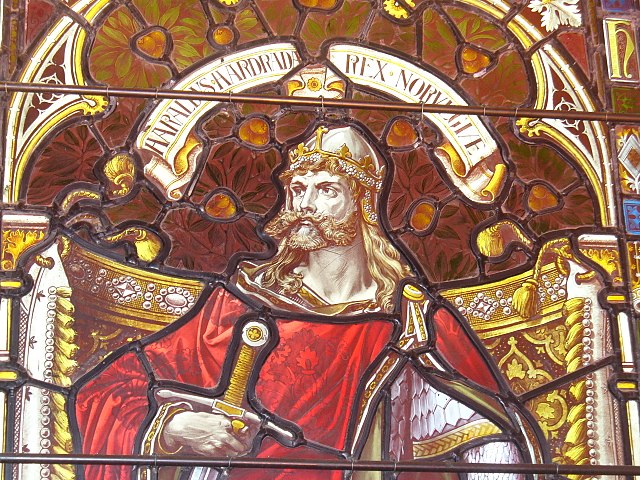
Considered by many as the last true Viking warrior king, Harald Hardrada was quite possibly the greatest fighter of his age. And his name reflects this. “Hardrada” translates as “hard ruler.”
Born to the leader of a small territory in eastern Norway, Harald got the taste of a Viking warrior’s life early. By the age of 15, he was fighting for the Norwegian king, and his half-brother, Olaf II. Known as the Battle of Stiklestad, Olaf’s forces fought against a coalition of nobles to establish Christianity as the official religion of Norway.29 Olaf was killed in the battle (and later sainted), and young Harald was forced to flee Norway.
After leaving his homeland, he traveled to the Kiev, home of the Rus who themselves were descended from Viking explorers who had settled in eastern Europe. Taken in as the guest of Kiev’s leader, Yaroslav the Wise, Harald seems to have stayed in the city for a number of years, fighting on behalf of Yaroslav against enemies from Poland, Estonia, and Byzantium. Despite the fact that he became one of Yarslov’s military leaders, Harald was unable to gain greater power, and so left. But not, some sources say, without catching the eye of Yarslav’s daughter, Elizabeth.30
Traveling south from Kiev, Harald enlisted in the Varangian guard, a Byzantine military group composed of Vikings, Normans, and Anglo-Saxons charged with protecting the emperor. Fighting in the Mediterranean, North Africa, and the Middle East on behalf of the Byzantines, Harald rose to the command of the Varangian guard. With the money he earned from years in the Varangian guard, he payed the dowry for Yaroslav’s daughter.31
In 1046, Harald returned to Scandinavia: 31 years old, rich, and powerful. Probably fearing what Harald meant for his throne, the Norwegian ruler Magnus the Good, offered Harald the position of co-king, which he accepted. The next year, Magnus died (most likely from injuries suffered in battle). For the 15 years, Harald used his position as King of Norway to wage war against the King of Denmark, Svein. In 1062, though Svein had lost nearly every battle against the Viking warrior king Harald I, the two sides made peace.32
Just four years later, in 1066, Harald died at the Battle of Stamford Bridge, while attempted to invade England.33
Sources on Viking Warriors
- “What is the origin of the word Viking?”, britannica.com
- The Infographics Show, “What Was the Life of a Viking Warrior Like?” worldhistory.org
- Christina von Nolcken, “‘The Wrath of the Northmen’: The Vikings and their Memory,” fathom.lib.uchicago.edu
- “Why were the Vikings such fierce warriors?” www.bbc.co.uk
- Daniel McCoy, “Berserkers and Other Shamanic Warriors,” norse-mythology.org
- Martin Arnold, The Vikings, 61
- Ibid
- Jóhanna Katrín Friðriksdóttir, “Jomsvikings: legendary Viking mercenaries or men of myth?” historyextra.com
- Ed. Sigurthur Nordal and G. Turville-Petre, Saga of the Jomsvikings, vsnrweb-publications.org.uk
- Ibid
- Ibid
- “Harald I,” britannica.com
- “Earliest Peoples in Norway,” britannica.com
- “Norse King Case Studies,” asncvikingage.com
- Ibid
- “Rollo,” britannica.com
- Joshua J. Mark, “Rollo of Normandy,” worldhistory.org
- James Graham-Campbell, The Viking World (London: Frances Lincoln, 2013), 29
- “Erik the Red,” britannica.com
- The Saga of Erik the Red, sagadb.org
- Ibid
- Ibid
- The Saga of the Greenlanders, awakenthenorth.org
- The Sagas of Olaf Tryggvason and of Harald the Tyrant, gutenberg.org
- Ibid
- Ibid
- “Olaf Tryggvason,” penelope.uchicago.edu
- Ibid
- “The Battle of Stiklestad,” viking.archeurope.com
- Maup van de Kerkhof, “Harald Hardrada: The Last Viking King,” historycooperative.org
- Kristian Helmersen, “Harald Hardrada,” vikingeskibsmuseet.dk
- Ibid
- Harald III Sigurdsson, britannica.com