Rise (But Not Fall) of Maya Civilization: Yucatan Handle the Truth!
The Maya civilization is one of the most remarkable and enduring cultures to have emerged in the Americas, captivating historians and archaeologists with its achievements in architecture, astronomy, writing, and art. Spanning over 3,000 years, the Mayan civilization flourished in the dense jungles and coastal plains of Mesoamerica, a region that includes present-day Mexico, Guatemala, Belize, Honduras, and El Salvador. From the early agricultural villages of the Preclassic period to the dazzling cities of the Classic period and the transformations of the Postclassic, the Maya developed a unique and sophisticated civilization. The rise of the Maya, however, was neither linear nor without challenges. It was a dynamic journey marked by innovation, conflict, cultural exchange, and the pursuit of cosmic understanding.
The Beginnings of Maya Society in the Preclassic Period
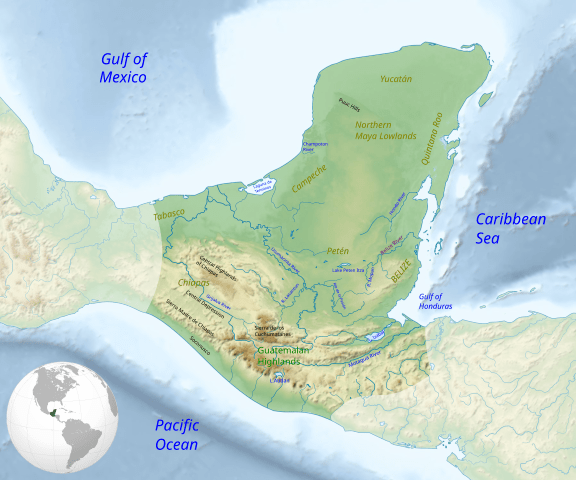
The Maya civilization, known for its remarkable achievements in writing, mathematics, and astronomy, did not emerge overnight. Its roots go back some 4,000 years. Back then, the first Maya lived as semi-sedentary farmers, most likely farming certain seasons and following game during others. By 1000 BCE, the Maya had permanently settled in towns in the lowlands of the Yucatan.
To help make sense of the major changes in Mayan culture and society during long period, modern scholars typically break it into three:
- The early preclassic period (c. 2000 BCE – 1000 BCE) covers much of what we’ve already discussed. The early Maya were primarily agricultural, with small, scattered villages relying on maize, beans, and squash as staple crops. These communities, though modest, began to experiment with early forms of architecture, building simple platforms, and eventually more complex structures. Archaeological evidence shows that by around 1000 BCE, the Maya had started to form more organized settlements, with some sites, like Nakbé and El Mirador in present-day Guatemala, showing early signs of urban development.
- The middle preclassic period (c. 1000 BCE – 300 BCE) saw Mayan cities increase in size and complexity, and continue to spread farther afield. Trade with Olmecs seems to have increased during this period, though whether the Olmecs were as large of an influence on the Maya as once believed has come under debate. It was in the era that Mayan cities began constructing their more public works of architecture like earthen mounds, canals, and irrigation systems. This allowed their populations to continue to grow. One of the most significant achievements of the period, though, was the development of the Maya hieroglyphic writing system.
- By the late preclassic period (c. 300 BCE – 250 CE), the Maya civilization began to take on characteristics that would define its later greatness. Large cities like Uaxactún and Tikal emerged as political and ceremonial centers, linked by trade routes that extended throughout the region. The Maya began constructing monumental architecture, including massive pyramid-temples and plazas, indicative of a growing social hierarchy and centralized leadership. This period also saw the rise of early forms of Maya writing, including the use of symbols to record important events, laying the groundwork for the elaborate hieroglyphic system that would develop in the Classic period.
The roots of Maya culture — its belief systems, political structures, and artistic traditions — began to solidify during these centuries, setting the stage for their civilization to flourish.
Classic Period, the Golden Age of the Ancient Maya Civilization
The Classic period of Maya history (250 CE – 900 CE) represents the zenith of Maya civilization, when the society reached its greatest political, cultural, and architectural heights. During this time, the Maya built some of their most iconic cities, including Tikal, Palenque, Yaxchilan, Calakmul, and Copán. These urban centers were not only political capitals but also vibrant hubs of art, science, and religion. The Maay perfected their calendar and achieved distinction as astronomers, artics, and architects par excellence.
Early Classic Period
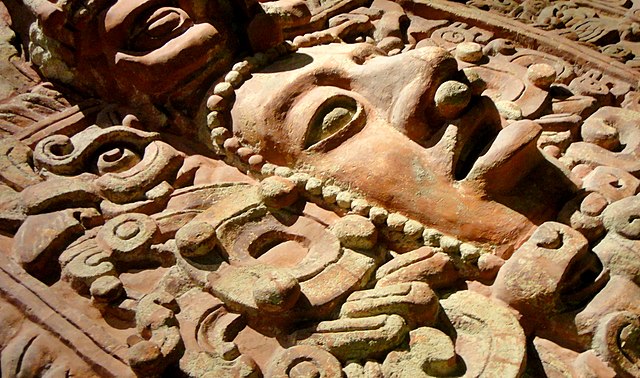
The Early Classic period (250 CE – 600 CE) marks the beginning of the Maya civilization’s most powerful and influential era. During these centuries, the Maya developed their cities into vast urban centers, achieved remarkable architectural feats, and refined their social and political systems. This period witnessed the rise of monumental architecture, sophisticated artwork, and a complex religious and political landscape.
Cities like Tikal, Calakmul, and El Pilar flourished during the Early Classic, becoming the epicenters of Maya power. These cities were not only political hubs but also cultural and religious centers, where rulers wielded both secular and spiritual authority. The rulers, often referred to as a king, would commission grand ceremonial structures and monuments, many of which depicted their divine connection to the gods and their role in maintaining cosmic order.
This period also saw an explosion of written texts. The Maya used their now centuries old writing system to record the lives of their rulers, significant events, and dynastic lineages. These inscriptions were often carved on stelae (stone monuments) and altars placed in prominent public spaces. The Maya calendar was also refined during this period, as evidenced by the earliest dated inscriptions on stelae dating to the late third-century.
Trade networks expanded dramatically. This economic prosperity helped support the growth of urban centers and the arts, leading to advances in sculpture, pottery, and murals. Based on pottery and architecture found in Mayan cities, it seems the ancient city-state of Teotihuacán, itself a great ancient civilization, held considerable sway in the Mayan world.
Late Classic Period
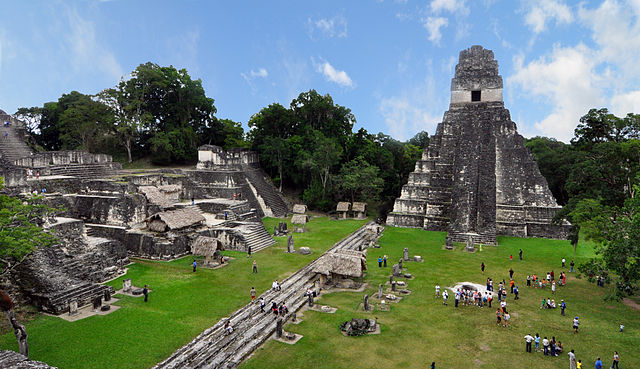
By the end of the Early Classic period, the Maya civilization was firmly entrenched in its golden age, laying the foundations for the even greater achievements that would come in the Late Classic period (600 CE – 900 CE).
Politically, the Late Classic period was defined by a complex network of city-states, each ruled by powerful leaders who maintained control through warfare, diplomacy, and trade. These rulers were often depicted on monuments and stelae, which recorded their conquests, alliances, and dynastic history. Warfare between rival city-states was a common feature of the period, with kings vying for control over territory, resources, and prestige.
One of the most remarkable achievements of the Classic period was the Maya’s advancements in writing and astronomy. The Maya hieroglyphic system reached its peak, with intricate inscriptions detailing royal lineage, political events, and ritual practices. These texts were often accompanied by detailed astronomical records, highlighting the Maya’s profound understanding of celestial bodies and their ability to predict solar and lunar eclipses, as well as the movements of Venus and other planets.
Architecturally, classic Maya civilization constructed some of the most awe-inspiring structures of the ancient world, including towering pyramids, palaces, and observatories. The famous step pyramids at Palenque and Tikal are still considered masterpieces of ancient engineering.
However, by the late ninth-century, many southern cities began to experience decline due to factors such as warfare, environmental degradation, and possible drought. Despite this, the Maya civilization remained vibrant in the northern cities, such as Chichen Itza, where the legacy of the Classic period continued to thrive.
Post Classic Period (Don’t Call it a Comeback)
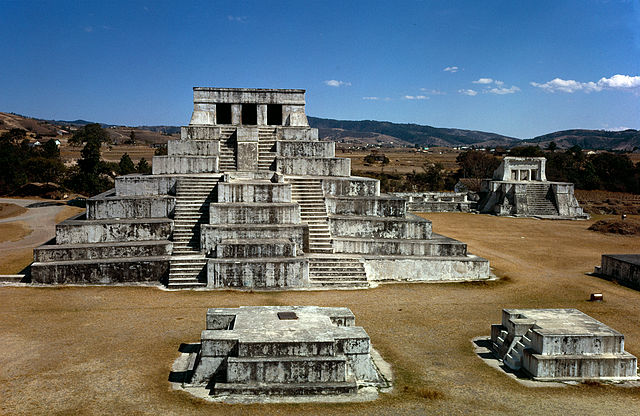
The Postclassic period (c. 900 CE – c. 1500 CE) marks a time of significant change and transformation for the Maya civilization. Following the decline of many southern Maya cities in the late Classic period, which may have been caused by factors like warfare, environmental stress, and prolonged drought, the focus of Maya civilization shifted northward, particularly to the Yucatan Peninsula. Cities like Chichen Itza, Uxmal, and Mayapan became powerful centers of culture, trade, and politics.
While the southern Maya lowlands saw a decline in monumental construction and urban life, the northern cities flourished with new architectural styles, including large, expansive platforms, pyramids, and colonnades. The Puuc style, characterized by finely crafted stone masonry and the use of decorative motifs, became prominent in the northern Yucatan, seen in the ruins of Uxmal and Labna. The architecture of the Postclassic period was also marked by more military and defensive structures, such as the large, walled city of Mayapan, reflecting a more unstable and conflict-prone era.
Politically, the rise of Chichen Itza as a dominant force in the northern Yucatan, along with its complex interactions with other regional centers, marked the period. This era also saw the influence of Toltec culture, especially in Chichen Itza. In fact, archaeologists have found evidence of the Maya worshiping the Toltec rain god, Tlaloc, as well as their traditional rain god, Chac in this period.
Though the Postclassic period started with a Mayan renaissance following the collapse of the Late Classic period, it ended in tragedy. The coming of the Spanish in the early sixteenth-century brought diseases that devastated populations. Many Maya were enslaved by conquistadors who looked to set themselves up as wealthy lords in Mexico. And Spanish missionaries, prone to seeing the devil in the beliefs of the New World, destroyed centuries worth of written documents, shrouding Mayan history in mystery.
There Was Never a Mayan Empire
Despite the extraordinary achievements of the Maya civilization, there was never a single, unified “Mayan Empire,” like Rome or the Aztecs. Instead, the Maya civilization was composed of numerous independent city-states, each with its own rulers, political systems, and distinct cultures. The absence of a unified empire can be attributed to several factors, including geography, political structure, and cultural values.
Each city-state was ruled by a king (and sometimes a queen) who claimed divine descent. These rulers maintained power through a combination of political alliances, warfare, and religious ritual. Rival city-states, such as Tikal and Calakmul, frequently engaged in warfare to gain control over territory, resources, and prestige. These conflicts prevented the consolidation of power into a single empire, as Maya rulers were more focused on their own cities than on a larger, coordinated political entity.
Sources on the Rise of Maya Civilization
- “Ancient Maya Civilization,” marc.ucsb.edu
- Owen Jarus and Jessica Leggett, “The Maya: History, Cultur, and Gods,” www.livescience.com
- “The Mayan Pre-Classic Period,” historyonthenet.com
- “Preclassic Period,” marc.ucsb.edu
- Mark Cartwright, “Maya Writing,” worldhistory.org
- “The Mayan Pre-Classic Period,” historyonthenet.com
- “Classic Period,” marc.ucsb.edu
- Ibid
- Ibid
- Cartwright, “Maya Writing,” worldhistory.org
- “Classic Period,” marc.ucsb.edu
- Ibid
- “The Mayan Classic Era,” historyonthenet.com
- Ibid
- Christopher Minster, “Ancient Mayan Astronomy,” thoughtco.com
- “Classic and Postclassic Periods,” samnoblemuseum.ou.edu/
- “Beginning and End of the Maya Classic Period (c. 250 CE–900 CE),” science.smith.edu
- “Postclassic Period,” marc.ucsb.edu
- Carolyn A. Bogert, “Puuc Style,” webpages.uidaho.edu
- “The Mayan Post-Classic Era,” historyonthenet.com
- “Postclassic Period,” marc.ucsb.edu
- Maria C. Gomez, “Maya Government,” worldhistory.org
- Christopher Minster, “Politics and the Political System of the Ancient Maya,” thoughtco.com
- “What Really Caused the Collapse of the Maya Civilization?” nationalgeographic.com