Huginn and Muninn: Odin’s Ravens in Norse Mythology
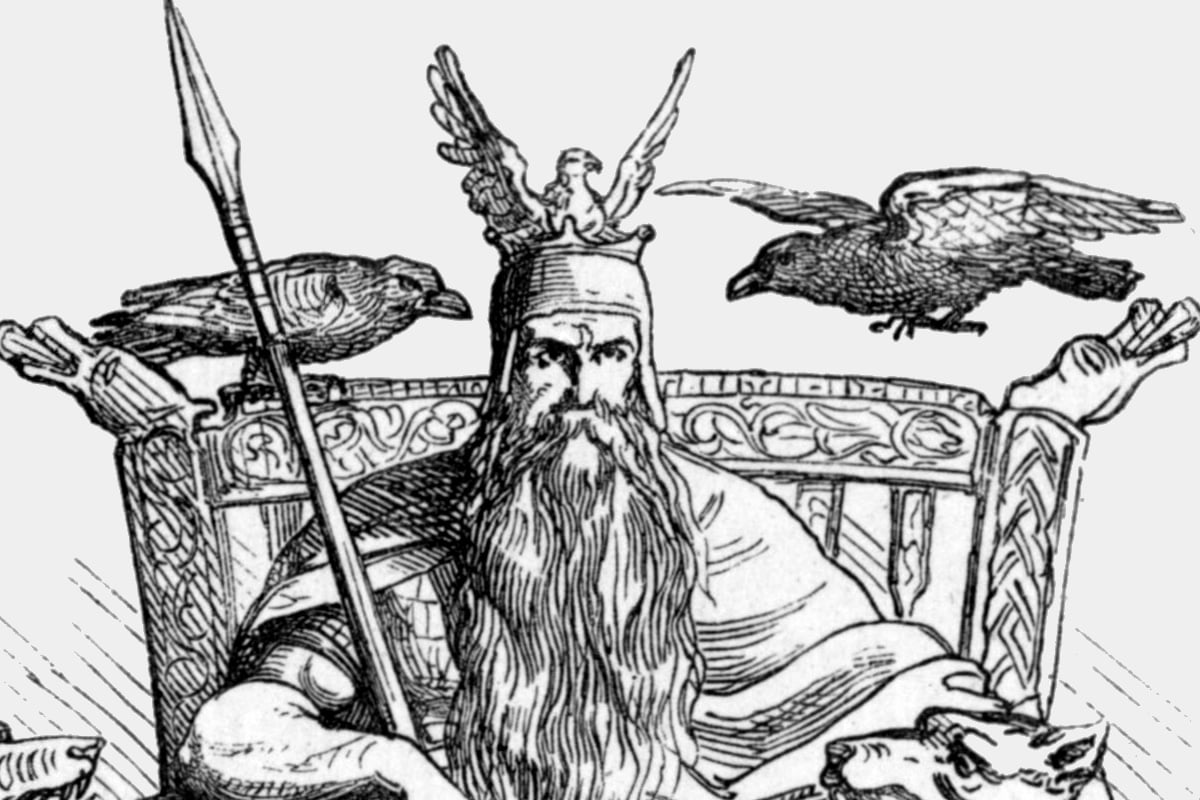
Huginn and Muninn (sometimes spelled Hugin and Munin) are two of the more better-known figures from Norse mythology, though they may be more well-known by the moniker “Odin’s ravens.” In the Viking Age, the two birds were often depicted with the chief Norse god. From stone carvings to imprints in metal armor, Viking artists made ample use of Huginn and Muninn.
Odin, God of Wisdom
Before we explore the role that Huginn and Muninn played in Norse belief, we need to understand who Odin was.
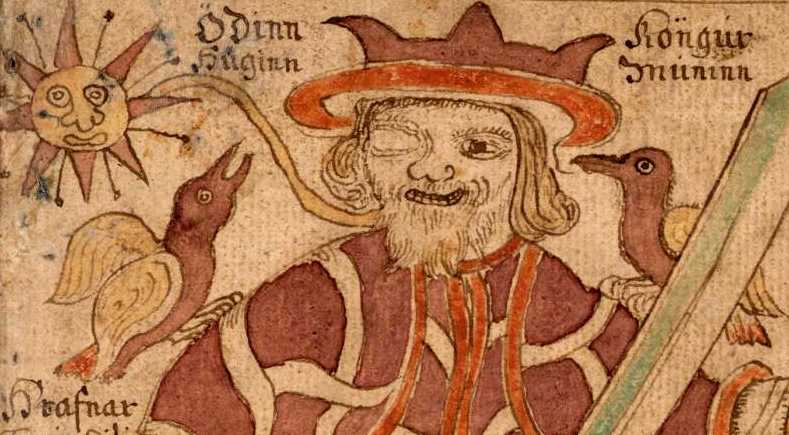
The chief of the Norse gods, Odin was also known as the “Allfather.” Possessing many qualities, the one for which is best remembered is his wisdom. There are several tales of how Odin became so sage, all of which are rather brutal. One says that Odin gave an eye for knowledge, and he is thus often depicted with only one working eye.
Another says that he hung himself from the great ash tree at the center of the world, known as Yggdrasil, and stabbed himself in the side with this spear, Gungir. Through these acts of self-mutilation, Odin had visions which revealed secret wisdom, such as how to write in runic script (a gift which he then passed on to humanity).1
Just because Odin was the god of wisdom, doesn’t mean he couldn’t become wiser. That’s where his little buddies Huginn and Muninn come in.
Huginn and Muninn in Norse Mythology
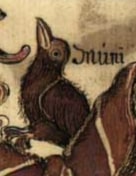
Huginn and Muninn were companions of Odin who helped the learn what was going on in the worlds he ruled. As part of this role, the two ravens flew around Asgard (the realm of the gods) and Midgard (the earth). Each night, as Odin sat on his throne in Asgard, Huginn and Muninn perched on his shoulders, whispering to him about what they saw.2
The idea of Odin’s ravens acting as his eyes and ears is more than just a good story – it shows that Huginn and Muninn were symbols of intellect in Norse belief. This symbolism is also made evident by their names: Huginn meaning “thought” and Muninn meaning “memory” in Old Norse.
Even though Huginn and Muninn were not gods, their close association with Odin gave them a special place in the hearts and minds of the Norse people. In fact, they believed they could pray to the two ravens for power and guidance.3
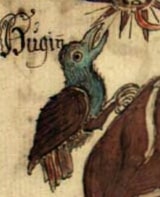
The importance of Huginn and Muninn to Vikings’ belief systems is evidenced in the archaeological record. Researchers have found armor and jewelry depicting the birds accompanying Odin dating back as far as the sixth-century AD – approximately 300 years before the VIking Age even started!4
Much of what we know about Huginn and Muninn, though, comes from the Poetic Edda. A thirteenth-century collection of older Norse myths, the Poetic Edda is a treasure chest of information on Norse beliefs. Given that Vikings used rues which they carved into stone, wood, and bones (among other materials), they did not lay down their own beliefs and myths systematically. Fortunately, knowledge of Norse mythology lived on well into the Christian era where it could be recorded. On Huginn and Muninn, this manuscript tells us5:
“O’er Mithgarth Hugin | and Munin both
Each day set forth to fly”
The Science of Odin’s Ravens
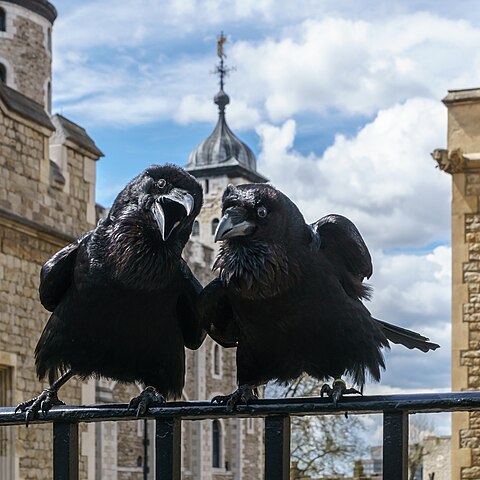
With names like Thought and Memory, Vikings clearly believed that ravens were intelligent creatures. And they were totally right! Over the last few decades, scientists have gone deep on the cognitive abilities of these amazing birds. Turns out, ravens possess intellectual abilities previously thought to only belong to great apes (including humans).
- Social intelligence. Just like Huginn and Munnin’s daily flights together, ravens are remarkably social creatures. They return to common foraging grounds, have hierarchies to their groups, and recognize other ravens (and whether they liked them or not).6
- Tool making. Turns out you don’t need thumbs to make tools. Scientists have observed ravens shaping sticks into a curve that they used to pry food out of crevices. But it doesn’t stop there! Ravens also use tools to carry objects that they can’t properly manipulate with their beaks.7
- Problem solving. Ravens are adept puzzlers; they can even use water displacement to move treats through tubes!8
- Planning for the future. Scientists have known for a long time that animals can store food for the future, but ravens have shown the ability to forgo food scientists give them in the hope they’ll get a better reward later. This shows a ability to go after the deferred reward is pretty rare in the animal kingdom.9
Sources on Huginn and Muninn
- “Odin – the one-eyed All-Father,” historiska.se
- Norse Myths and Legends: Tales of Heroes, Gods, and Monsters, 62
- “Hugin and Munin: Odin’s Ravens, museum.ie
- Daniel McCoy, “Hugin and Munin,” norse-mythology.org
- Snorri Sturluson, “Grimnismol,” Poetic Edda, sacred-texts.com
- Thomas Bugnyar, “Why are ravens smart? Exploring the social intelligence hypothesis,” Journal of Ornothology, 165, 15–26 (2024) via link.springer.com
- Agata Blaszczak-Boxe, “Crows are first animals spotted using tools to carry objects,” newscientist.com
- “Are ravens as smart (or smarter) than us?” bbcearth.com
- Ibid