Mayan Warriors and Their Role in Mayan History: Let the Battle Begin!
Mayan warriors were one of the dominant military forces of their day. Unfortunately, not as much is known about them as their Aztec counterparts. What we do, know, however, is why Mayan warriors fought, how they fought (and the terrifying weapons they used), and why. Let’s get into it.
Maya Warfare and Military Goals

The battlefield of the Maya civilization was likely a scene of intense chaos and unpredictability. Scholars and archaeologists have struggled to determine whether battle formations evolved over time within Maya warfare. Instead, evidence suggests that the primary mode of combat involved individual Mayan warriors engaging in hand-to-hand combat or small groups fighting side by side to shield each other’s flanks. This approach likely prevailed due to the absence of professional standing armies in Maya city-states, which instead relied on citizen militias raised during times of conflict.1
To equip these militias, each city-state maintained centralized stores of Mayan weapons, which were distributed by government officials before military campaigns or battles. These warriors were typically organized according to their hometowns, recruited by their local lords for service. Once engaged in battle, they would use a standard crafted by attaching shields to the tops of spears. Much like the banners or flags used in ancient and medieval Europe, these battle standards allowed Maya warriors to coordinate their movements before the chaos of battle ensued.2
The ultimate objective of Maya warfare was primarily political, with the goal of gaining control over rival city-states. By subjugating neighboring polities, rulers increased their power, prestige, and the wealth of their cities through tribute payments.3 Though many Mayan warriors perished in these conflicts, the primary aim was not to kill enemies outright. Instead, capturing prisoners for ritual sacrifice played a central role in their military campaigns, reflecting the deep spiritual and symbolic significance of warfare in Mayan society.4
How Mayan Warriors Were Trained
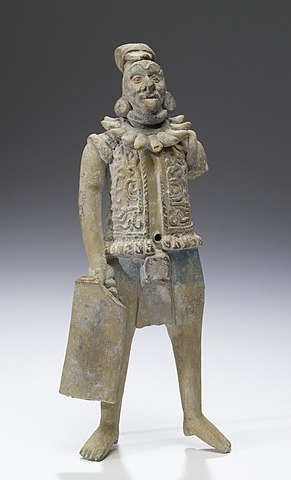
Unlike ancient Eurasian warfare, Mayan warriors did not have larger animals like horses to ride and carry their gear while on campaign. To effectively carry out military operations, Mayan warriors would have to travel several kilometers by foot. As such, their training consisted of large amounts of cardio exercises, so that each warrior could travel long distances before diving into the physical rigor of battle.5
To hone their battle skills, Mayan warriors also engaged in mock battles.6 Since the Maya city-states had no professional armies, though, this could largely have been a luxury of the elite class. Elites in Mayan society would have had more free-time and greater access to training weapons, giving them ample opportunity to train for combat. It is hard to imagine, however, that everyday Mayas never found time to train, given the fact they could be called out on campaign by their regional lord.
Maya Warriors Weapons and Techniques
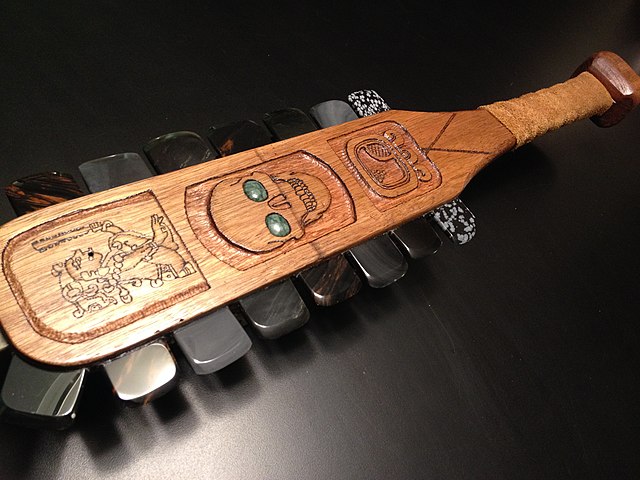
Mayan warriors wielded an array of fearsome weapons, often crafted with sharp obsidian blades, designed for maximum effectiveness in battle.
Spears were among the most versatile weapons in the Mayan arsenal. With long wooden shafts and obsidian-tipped heads, these spears could be used for both thrusting in close combat and throwing at enemies from a distance. This dual function gave Mayan warriors a strategic advantage, allowing them to strike with precision while maintaining distance.7
Macuahuitl was another deadly weapon in their arsenal. Similar to its Aztec counterpart, this large wooden club featured sharp obsidian blades along its edge, capable of slicing through armor and flesh. Skilled warriors wielded these in close combat, often to devastating effect. The larger two-handed macuahuitl required exceptional strength and skill to master.
Spiked clubs were also used, as evidenced by recent archaeological studies revealing injuries from these weapons. Though simpler than the macuahuitl, they were no less effective in hand-to-hand combat, with oval-shaped skull impressions found on Mayan warrior remains.8
Projectile weapons gave Mayan warriors an edge in long-range attacks. The atlatl, a spear-throwing device, allowed for greater distance and force, often piercing armor. The bow and arrow was similarly effective, with arrows tipped with sharp stone points. Blowguns, used for stealth attacks, launched darts and clay pellets, though without poison, they remained effective due to their range and precision.
For protection, Mayan warriors wore cotton armor, which was lighter and more mobile than European iron armor. Quilted cotton provided defense against arrows and spears, while shields, often made from wood and animal hide, helped warriors block attacks.9 Some regions even developed foldable shields, made from woven mats for ease of transport.10
These weapons and armor equipped the Mayan warriors to dominate on the battlefield, blending offense and defense with remarkable ingenuity.
Sources on Mayan Warriors
- David Freidel, “Maya Warfare, Myth and Reality,” maya.csueastbay.edu
- Ibid
- Lynn V. Foster, Handbook to LIfe in the Ancient Maya World (New York, NY: Facts on File, Inc., 2002), 148-149
- Foster, Handbook to LIfe in the Ancient Maya World, 151
- “Why Were the Maya Such Excellent Warriors,” dailyhistory.org
- Ibid
- Maup van de Kerkhof, “Mayan Weapons: From Spears to Cotton Armor,” historycooperative.org
- Stanley Serafin, Carlos Peraza Lope, and Eunice Uc González, “Bioarchaeological investigation of ancient Maya violence and warfare in inland northwest Yucatan, Mexico,” onlinelibrary.wiley.com
- Cara Grace Tremain, “RESOURCE: Ancient Maya Clothing,” mexicolore.co.uk
- Foster, Handbook to LIfe in the Ancient Maya World, 146