Mayan Houses: At Home With the Ancient Maya
We live so much of our lives in our homes. We cook, clean, sleep, and enjoy the company of family and friends all within the walls of our house. Ancient peoples were no different. Mayan houses provide some of the greatest insight into the daily lives of the ancient Maya. They can tell us how they spent their days, how they conceived of community, and so much more.
Mayan Houses as a Living Space
The history of Mayan houses stretches all the way back to 1600 BCE. Known as the Barra Phase, this early era of Maya history is the first time we see people building structures that look “Mayan.” These early discoveries were made on the Pacific coast, but archaeologists have found other distinctively Maya structures farther inland in the Péten region starting around 1400 BCE.1 The foundation (pardon the pun) that these early residential buildings set continued on through ancient Maya history and still informs how the modern Maya build their homes!
As ancient Maya society developed and distinct social classes emerged, we see a split between how the commoner class and the ruling elites built, and lived in, their homes.
Commoner Houses
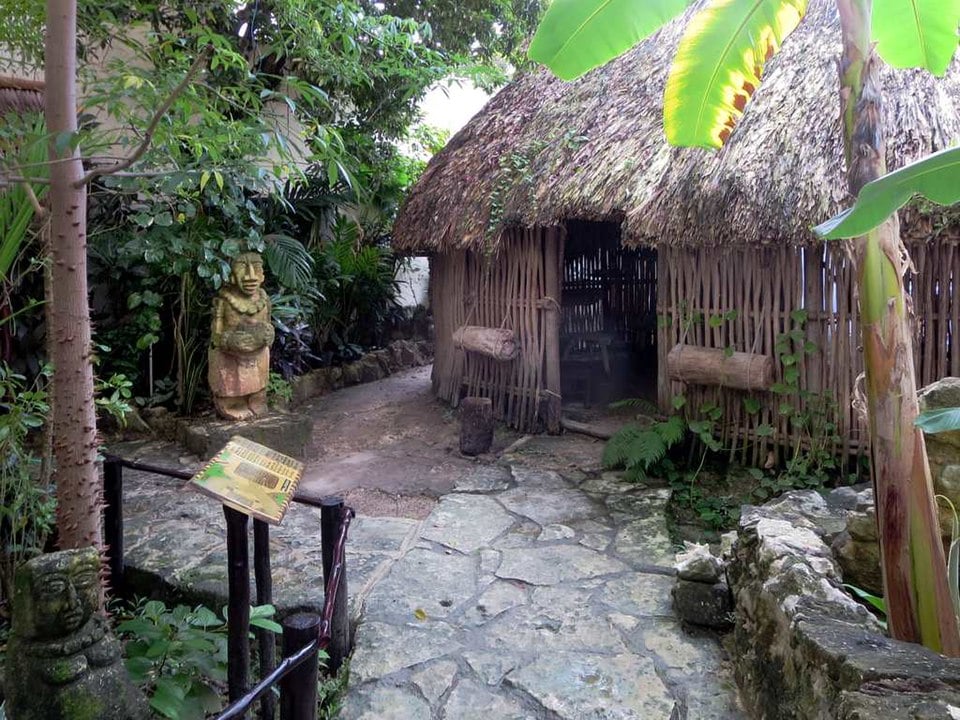
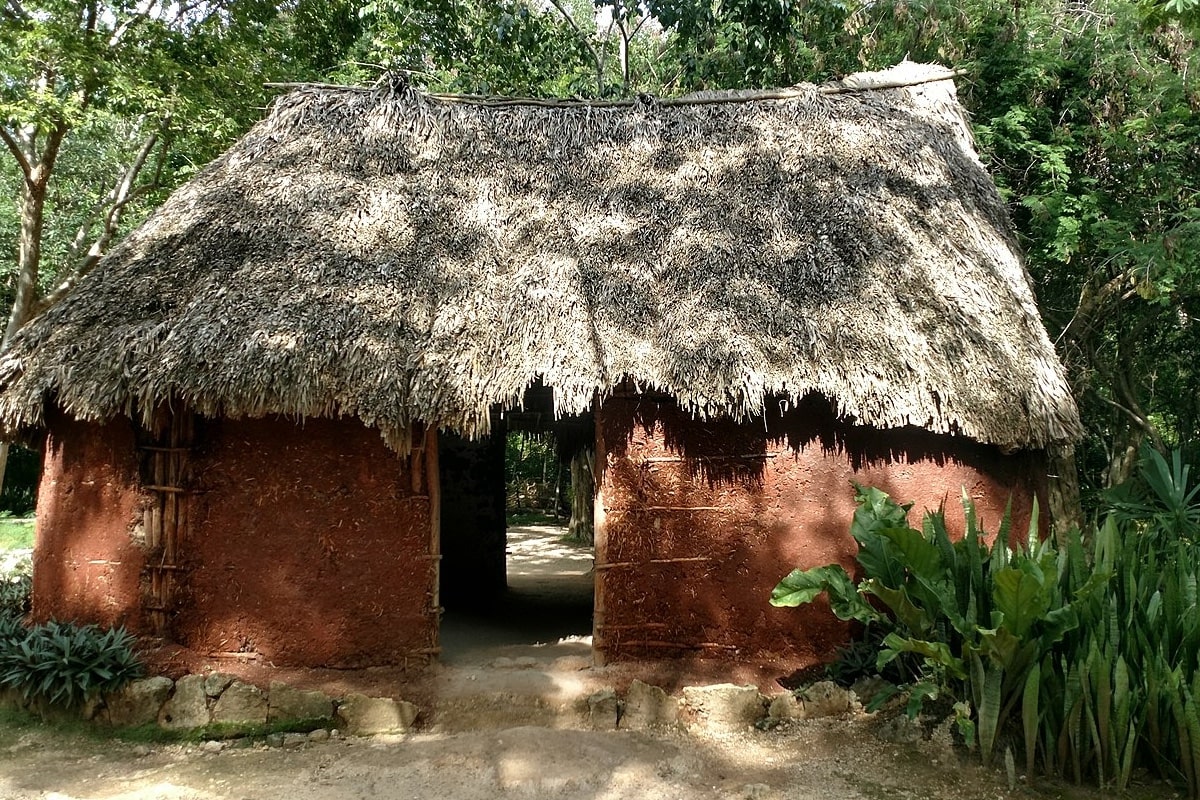
For the vast majority of people, Mayan houses were small, single room structures with no windows and a single door (usually facing east). The walls of these homes were built using wooden poles and adobe, while the roofs were made of thatch. The Maya typically built their homes on earthen platforms to avoid seasonal flooding, pests, and other unpleasantness.2
The interior of these homes was also fairly sparse. If you walked into an ancient Maya house, you would find beds topped with cotton blankets (actually sounds pretty comfy), a bench for sitting, cooking paraphernalia, ceramic pots for cooking and storing food, and some work tools.3 While this might sound a little bare and uncomfortable to us, the ancient Maya wouldn’t have actually spent much of their time inside these houses. A lot of their daily work and routine was carried on outside or in different buildings (more on that below).
Elite Houses and Palaces
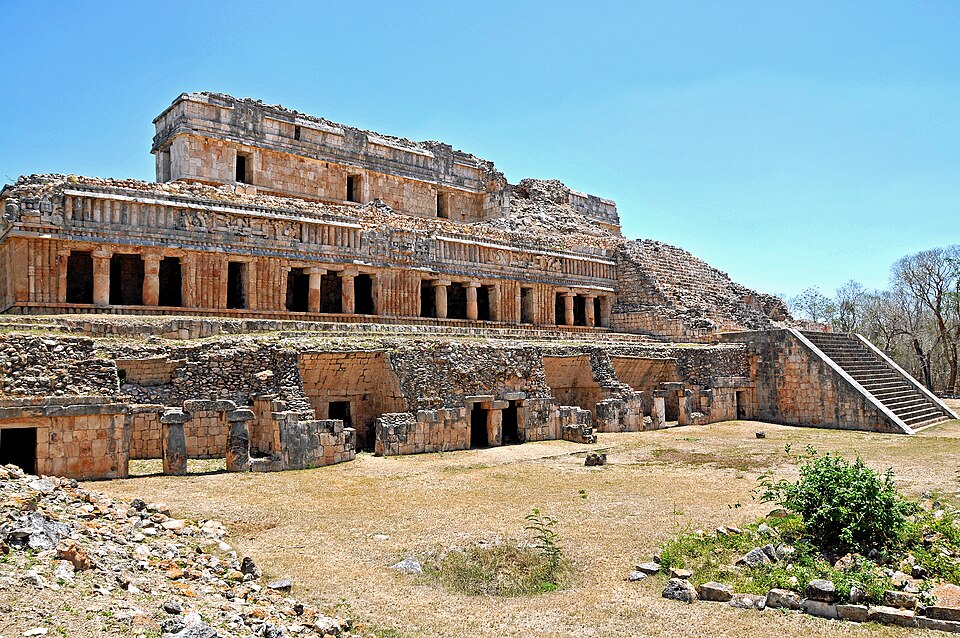
Kings and other nobility lived in a bit more luxury than most ancient Maya. And by “a bit,” I mean a lot. The palaces these elites called home were multi-story structures made from stone, adorned with various types of art from their region’s top artists.4 From murals and sculpture to fine pottery used for serving food and drink, their palatial homes would have exuded their status and power, and the luxury that it afforded them.
Some palaces even contained interior courtyards. Surrounded by the stone walls of the structure, this was an area where the nobility could host important guests and (presumably) relax. The presence of these areas, as well as the sheer size of Maya palaces, has led researchers to conclude that palaces were not just epicenters of power, but also a place to get the business of ruling done.5 Additionally, kings were known to host social celebrations, like feasts and dances, from their palaces.6
Mayan Houses as a Community Center
No matter your rank in society, a sense of community is important. We see this dynamic play out in how Mayan houses were built and grouped together. Whether rich to poor, the ancient Maya were never far from their neighbors.
Residential Compounds
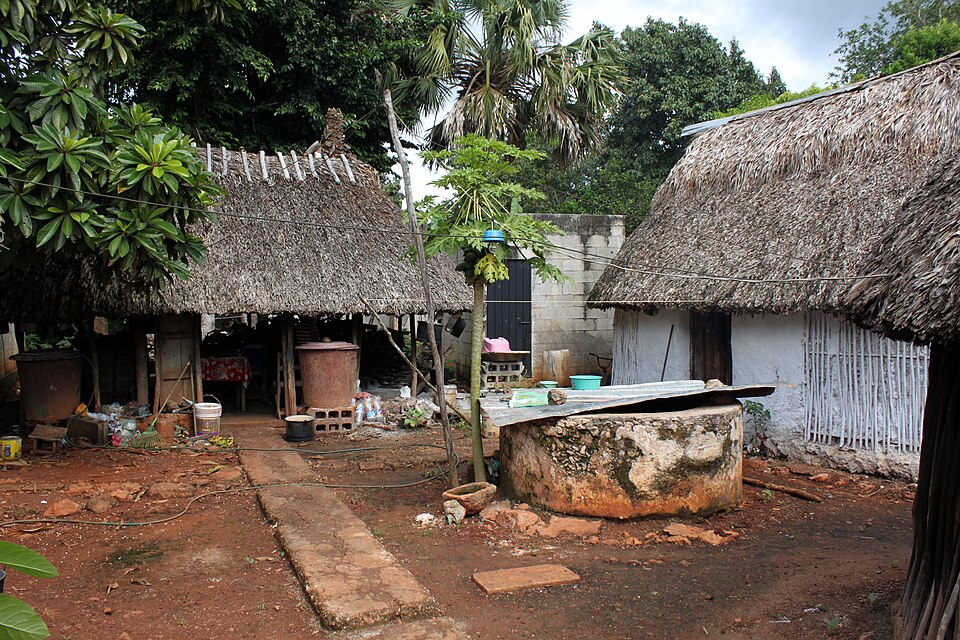
Most ancient Mayan houses were located outside of the city center. Rather than creating one-off properties surrounded by farmland, the ancient Maya created residential compounds for themselves. To keep their houses away from food waters during the rainy seasons, the Maya constructed earthen platforms on which they built their homes. Entire extended families lived together in these compounds, sharing the work, joys, and hardships of life.
Apart from the single room houses we discussed above, these neighborhoods tended to have a garden and a separate kitchen covered by an awning. As we discussed above, the ancient Maya spent most of their time outside of their home. A good deal of it would have been spent in the outdoors structures of their compounds, farming, cooking, rearing children, and repairing any damage to buildings or tools. Work was divided by gender (as it was in most ancient societies). Men did the repairs, chopped firewood, and made tools and any new buildings their compound needed. Women cooked, cleaned, made pottery, tended the garden and livestock, and wove and spun their clothes.7
The ancient Maya also ate their meals outside under comfortable awnings. The Maya spent so much time outside, in fact, that one historian has noted that they “had more roofed space outside the walls than inside.”8
Palace Compounds
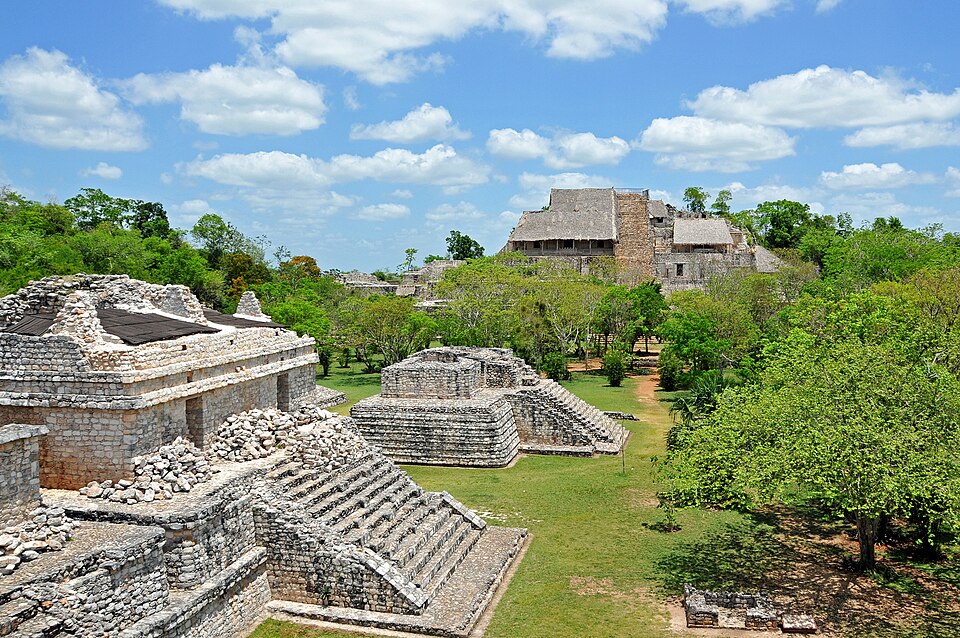
Maya elites lived in the center of their cities. The palaces they called home were public buildings, and played host to generations of Maya nobility. Palaces were placed in the center of the city in order to provide protection to the area’s ruling class in case of invasion.9 The Maya lived in city-states ruled by kings, and so the center of a city was the center of the kingdom.
While these large, intimidating dwellings of the ruling class differed in most respects from the single room homes of their subjects, there was one important commonality: the neighborhood. Just like commoners’ homes, elites lived in close proximity to one another. Their large homes were arrayed around a central plaza.10 This not only allowed for protection from other city-states, but allowed the nobility to set themselves apart from those they ruled. The closed-off nature of these urban dwellings would also have made it easier to host foreign dignitaries, hold feasts, and perform other duties of courtly life.
Sources on Mayan Houses
- Lynn V. Foster, Handbook to LIfe in the Ancient Maya World (New York, NY: Facts on File, Inc., 2002), 230-231
- Christopher Minster, “Ancient Mayan Architecture,” thoughtco.com
- Ian Mursell, “RESOURCE: A Maya farmer’s house,” mexicolore.co.uk
- Christopher Minster, “Ancient Mayan Architecture,” thoughtco.com
- Ibid
- Ibid
- Mursell, “RESOURCE: A Maya farmer’s house,” mexicolore.co.uk
- Ibid
- “Features of Mayan Cities,” historyonthenet.com
- Ibid